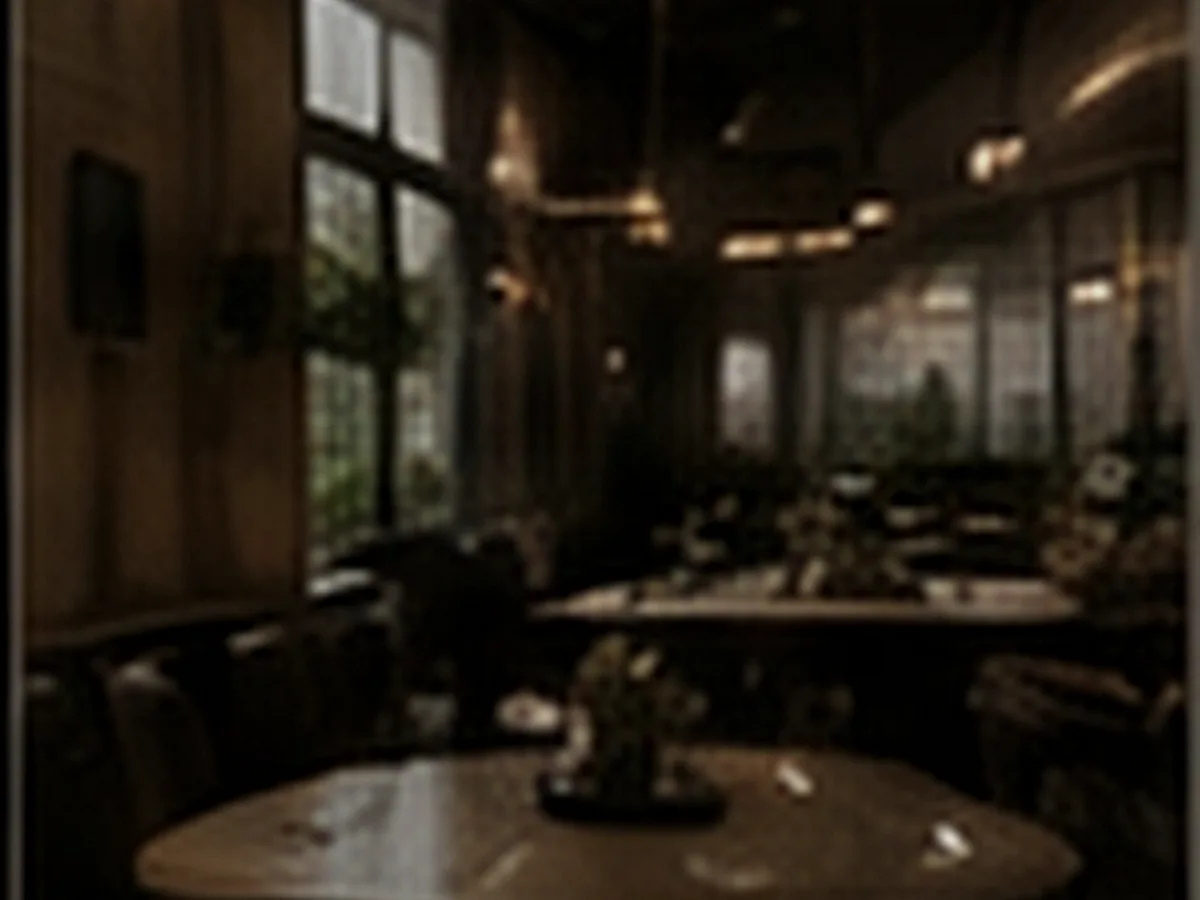
Minimal interiors are often described through subtraction: fewer objects, fewer colours, fewer visible details. That description is accurate but incomplete. A room can be nearly empty and still feel restless. Calm comes less from quantity than from hierarchy — a clear understanding of what should be noticed first, what should support it, and what can remain in shadow.
Begin with temperature, not colour
After sunset, the character of a room depends on the relationship between light and surface. Warm timber absorbs and softens illumination. Honed stone catches a narrow edge. Dark fabric allows furniture to settle into the background rather than float as a separate object.
This is why a restrained evening interior rarely relies on a single ceiling source. Light is distributed at different heights: beneath a shelf, beside a chair, across a work surface and behind a textured plane. The room becomes legible in fragments.
Atmosphere is created when every source has a task, but no single source demands attention.
Let dark areas remain dark
Uniform brightness removes depth. A useful evening scheme keeps circulation safe and working surfaces clear while allowing peripheral areas to recede. The eye reads this variation as distance, softness and quiet.
The most successful dark rooms are not black boxes. They contain several close tones — charcoal, brown, olive, bronze and muted grey — each revealed differently by the same lamp. This tonal range gives the room richness without adding visual noise.
Use repetition carefully
A repeated line can organise an entire space: the height of a shelf aligned with a door head, a band of light following a worktop, or the same radius appearing in a table and a chair. Repetition creates continuity, but only when it is subtle enough to be discovered rather than announced.
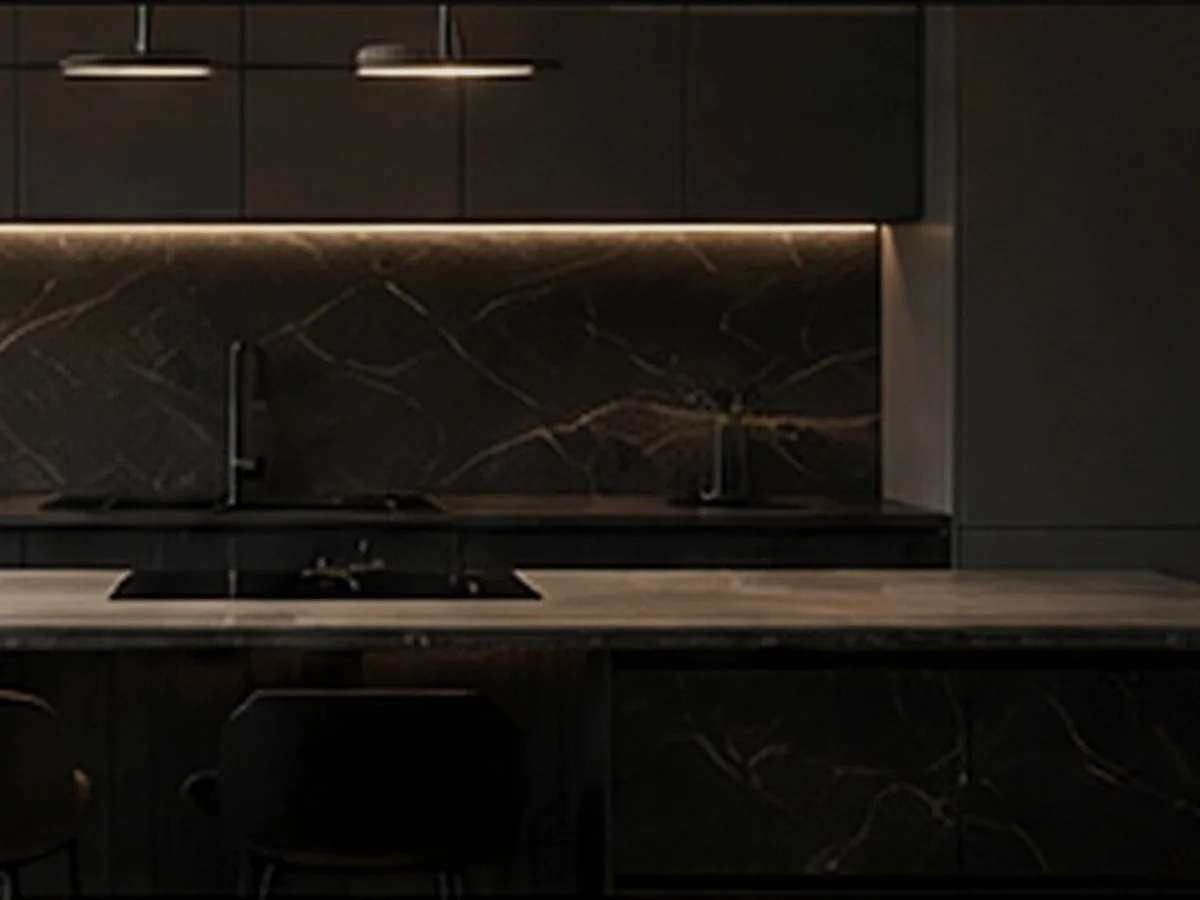
The result is not a formula or a style to reproduce. It is a way of editing: keep what supports the room, remove what competes with it, and leave enough space for daily life to remain visible.